Skip to content

HomeBoost SupportWe're here to help

Lorem ipsum dolor sit amet, consectetur adipiscing elit. Donec accumsan, nibh et porttitor consectetur, massa ligula sodales nulla, vel faucibus eros diam eu nisi.

FAQs

View all
What type of hot water system do I have?

There are three main types of hot water system in the United Kingdom – gravity fed, mains fed: combination boiler, and mains fed unvented cylinder.

Gravity fed

  • If you live in an older property there’s a good chance you have a gravity fed system, renowned for poor pressure and flow.
  • These systems are identified by a hot water cylinder stored in an airing cupboard, and a large cold water storage tank, often located in the loft.

Mains fed: Combi boiler

  • Combination boilers are common and rely solely on mains pressure to deliver water around your home.
  • These systems are identified by a wall hung boiler.
  • In a combi boiler system hot water is available on demand, and there are no water storage tanks.

Mains fed: Unvented

  • Unvented systems require a separate hot water cylinder to store a quantity of hot water at mains pressure.
  • These systems are identified by a wall hung boiler and metal-clad hot water storage tanks and no cold water storage.

Click here for more information on identifying your water system

What to do when a shower pump turns on by itself

If your pump is starting up on its own there are few things you need to consider.

First determine if you have a universal (negative head) pump. These pumps are easily identified by a pressure vessel on the top of the pump.

A universal (negative head) pump turn on when they recognise a pressure drop in the system. A dripping tap or leak in the system can cause the system pressure to drop which would activate a negative head pump, even though all outlets are turned off. This is called ‘hunting’. When a pump is ‘hunting’ you will hear the pump switch on for a few seconds when no outlets are open. Find out how to test if your pump is hunting. 

A positive head pump doesn’t have a pressure vessel. These pumps are activated by a flow switch set to turn the pump when a natural flow rate (without assistance from the pump) of 2 litres per minute passes through the pump.

If you have a positive head pump that is turning on and off during use, this is most likely due to the water flow rate being insufficient to activate the pump.

What is a shower pump?

A shower pump is a device that boosts water pressure in your pipes by increasing the volume of water which is pumped through them. The improved water pressure is visible at the showerhead where the force of the spray increases as the pressure and flow rate become stronger.

What is a gravity fed system?

If you live in an older property, there is a good chance you have a gravity fed system. Renowned for poor water pressure and flow.

A gravity fed system consists of a large cold water storage tank usually located in the loft and a hot water cylinder located in an airing cupboard. These systems rely on gravity to force water around the system, with the height of the cold-water storage tank determining the pressure throughout the system.

Cold water is delivered to a cold-water storage tank from the water mains. Cold water from the cold-water storage tank is then supplied to the outlets around the system, such as taps, toilets, showers and baths. Once an outlet requiring hot water is opened, gravity will force cold water from the cold-water storage tank into the hot water cylinder, this will then force hot water out from the top of the cylinder, delivering hot water to the open outlet.

Watch our video on gravity fed systems.

View our products for gravity fed systems.

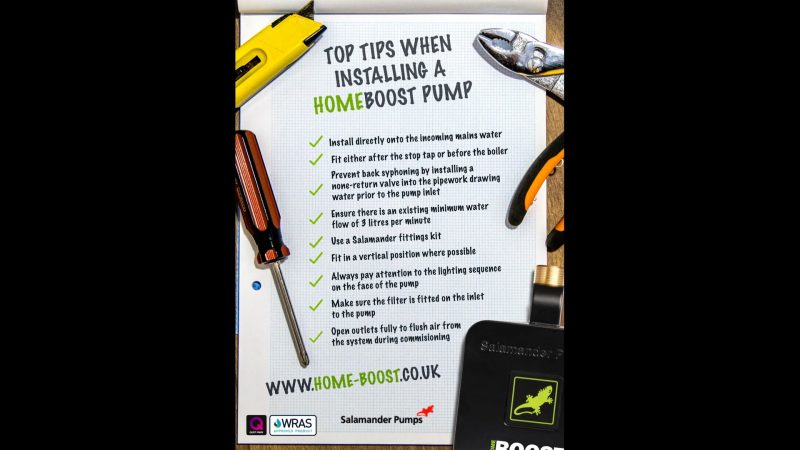
How can a HomeBoost fittings kit make installation easier

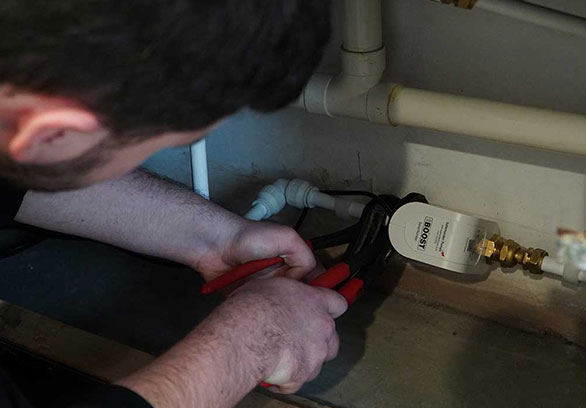
Using a HomeBoost fittings kit will ensure smooth and efficient installation. The kit includes high quality brass connectors and an isolating valve to ensure easy servicing, with the connectors designed to allow the pump to easily slide out when required.

HomeBoost has started making an unusual noise

All pumps will make some noise, as water is being moved at a high speed and being thrust out of a pump. Depending on the type of pump, water will be moved in different ways and therefore different pumps can make noises.

If the HomeBoost pump is making an unusual noise, it is worth checking the installation is correct and eliminate contributing factors to the operational noise such as transfer noise:

  • Pipework to and from the pump should be clipped and secure to help reduce any vibration transferring from the pump to the pipework during use.
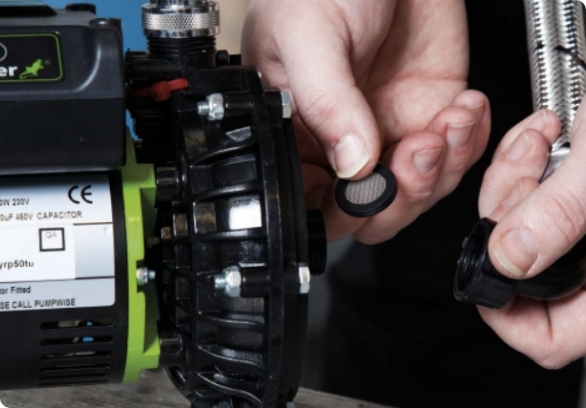
  • A blocked filter washer on the inlet pipework will starve the pump of water which will increase the noise of the HomeBoost, ensure the inlet filter is free from debris should you notice the pump has become noisy! Learn how to clean inlet filters.
Is the noise my HomeBoost pump is making normal?

We have designed our products to be as quiet as possible, but it is worth noting that there is some noise associated with the operation of our products. HomeBoost operates at 46dBA and has been awarded the Quiet Mark for being amongst the quietest in its category.

If you think your HomeBoost is noisier than it should be carry out the following –

  • Check the inlet filters are not blocked.
  • Check that nothing could be restricting the flow to HomeBoost.
  • Make sure that the pipework is securely clipped, and that HomeBoost isn’t in contact with anything other than the pipework.
Why is HomeBoost making a rattling noise?

If the pipework supplying the pump isn’t secured properly, the vibrations from the pump may cause it to rattle.  Make sure that the pipework is clipped.

My inline pump (TapBoost, HomeBoost, CombiBoost) isn’t turning on when I open an outlet. What should I do?

First, check the power supply to the pump.

Then check the natural flow of mains water is sufficient to activate the pump.

  • TapBoost requires at least 1.2 L/min to activate
  • HomeBoost and CombiBoost require 3 L/min.

In compliance with the Water Supply (Water Fittings) Regulations 1999, our range of inline pumps will not pump water if the natural mains flow rate is greater than 12 L/min.

Videos

View all

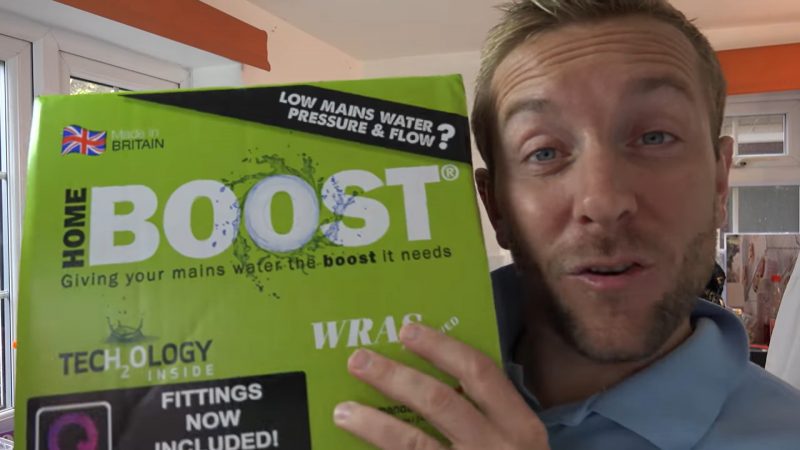
HomeBoost Introduction

Plumber Parts HomeBoost Review

How to Install HomeBoost

HomeBoost Installation

HomeBoost Installation Guide